Why Water Heaters Leak: 6 Causes Building Up Inside Your Tank
A leak is the end of a process, not the start. Knowing what causes a water heater to leak tells you whether a repair will last, and what to do so the next heater lasts longer.
1. Sediment on the bottom of the tank
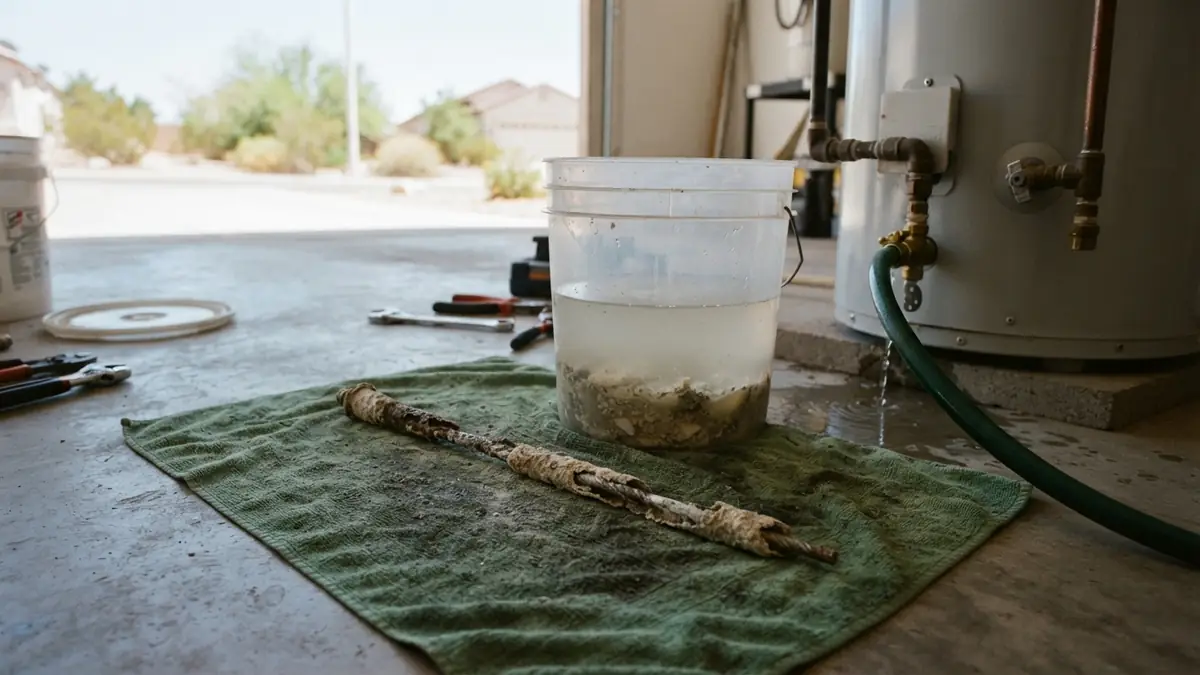
Minerals in the water settle on the bottom of the tank. On a gas heater the burner has to heat through that layer, which is the popping and rumbling you hear, and the overheated steel wears faster. Sediment also clogs and scores the drain valve.
2. An anode rod that has been used up
The anode rod is a sacrificial metal rod that corrodes so the tank does not. Once it is gone, the water starts on the tank. Some owners replace it every few years to extend a tank's life; a rotten-egg smell from the hot water is another sign it needs attention.
3. Water pressure that is too high
High incoming pressure strains every fitting and keeps the relief valve close to its limit. A pressure gauge on an outside tap shows it, and a pressure-reducing valve fixes it.
4. Thermal expansion
Heated water expands. In a closed system, with a pressure-reducing valve or a check valve at the meter, that expansion raises the pressure inside the tank on every heating cycle. An expansion tank absorbs it; without one, the relief valve starts to drip.
5. Corroded or loosened fittings
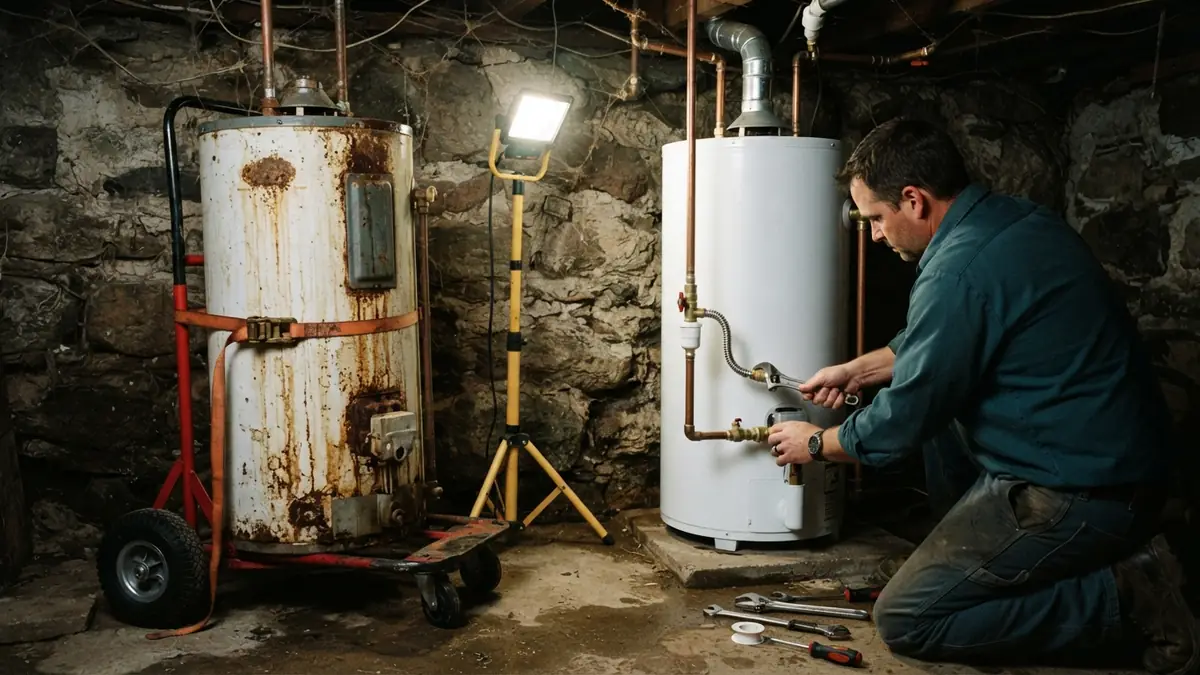
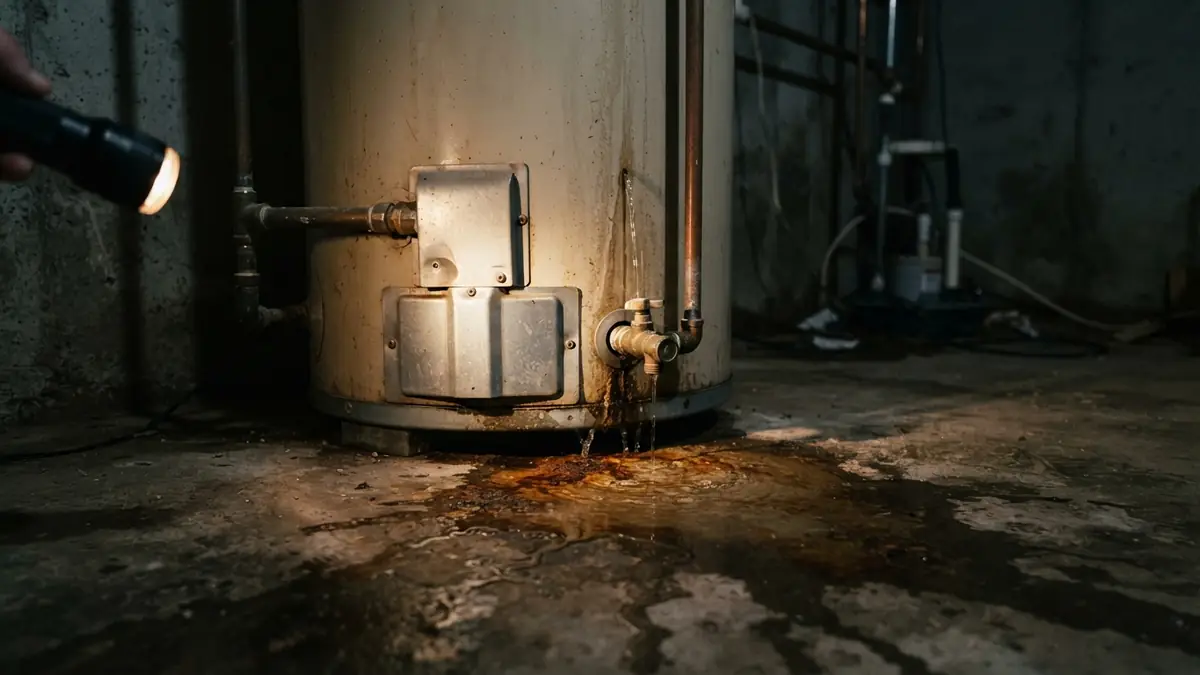
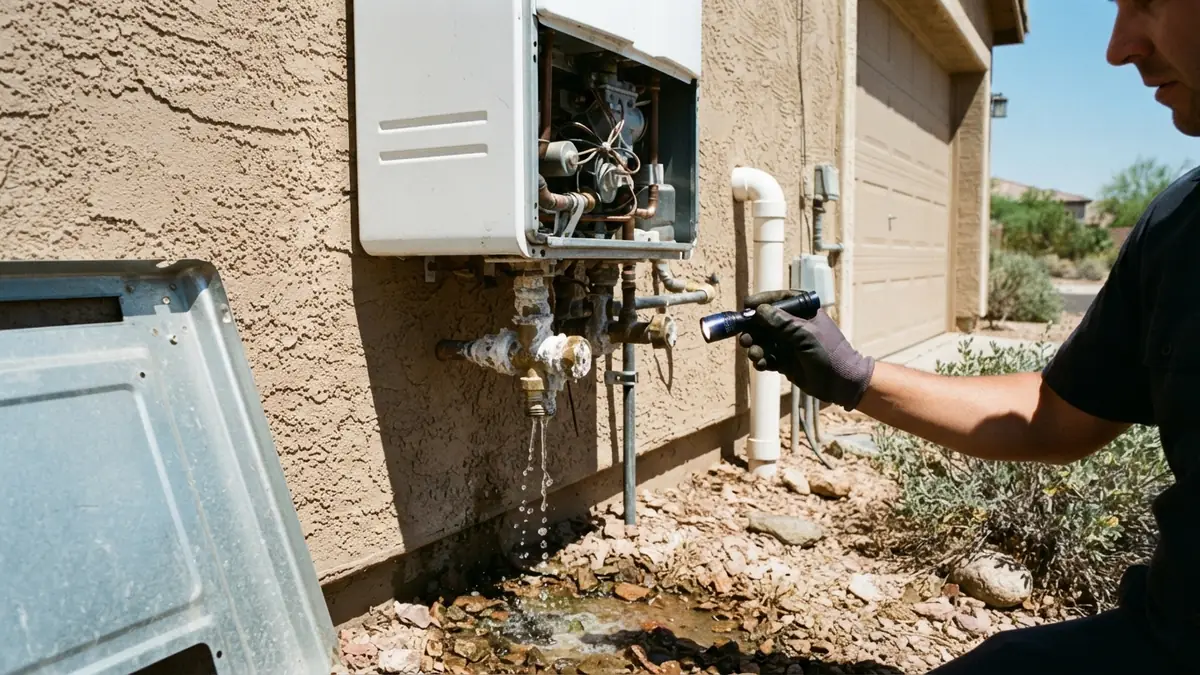
Where copper pipe meets the steel tank, the two metals corrode each other unless a dielectric fitting separates them. Heating and cooling also work joints loose over the years. That is why connections on top are such common leak points.
6. Age
Tank water heaters typically last 8 to 12 years. As the lining and anode wear out, the tank corrodes from the inside, and the final leak is usually at the bottom seam.
How to slow it down
Flush the tank to clear sediment, have the anode rod checked, keep the temperature around 120 to 125 °F, and fix pressure problems with an expansion tank or a pressure-reducing valve. Annual maintenance is estimated at $100 to $250, well below the cost of a failed tank. If it is already leaking, start with water heater leak repair near you.
Quick answers
What is the most common cause of a water heater leak?
The relief valve and the drain valve, followed by the connections on top. On older heaters, corrosion inside the tank.
Can flushing a water heater stop a leak?
Flushing removes sediment and helps prevent leaks. It does not fix a valve or a tank that is already leaking.
What are signs of a failing water heater?
Popping or rumbling, rusty hot water, a rotten-egg smell, water in the pan, and a tank past 10 years old.
Leak still running?
A plumber who handles leaking water heaters can trace it and quote it in writing.