Water Heater Leaking From the Bottom? 6 Places to Check Before You Replace It
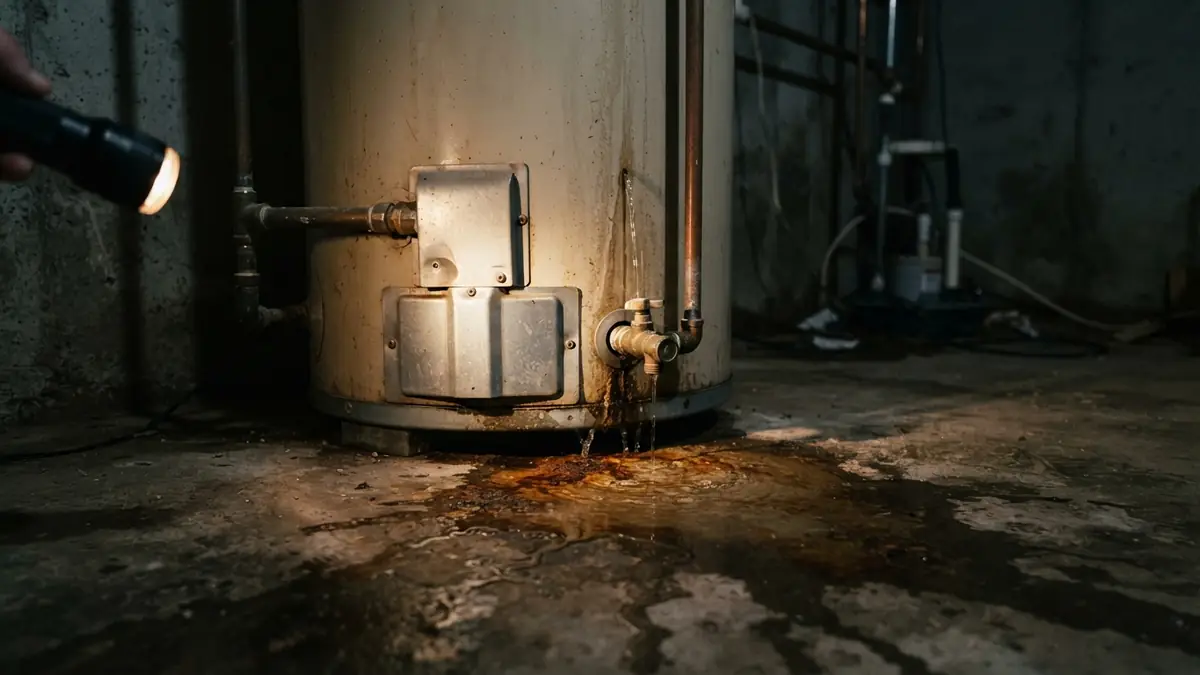
A puddle at the base of the tank is the moment most people decide the water heater is finished. Often it isn't. Water finds the lowest point, so a water heater leaking from the bottom may be leaking from somewhere else entirely, and five of the six places below are parts that can be replaced.
Before you look, make the heater safe: set the gas control to OFF or switch off its breaker, and close the cold supply valve if water is still coming out. The first-hour checklist for a leaking water heater walks through that step by step.
Start dry, then watch where the water appears first
Wipe the tank, the pipes and the floor completely dry with towels. Then watch, or lay a paper towel at each joint. The first spot to turn wet is your source, not the puddle at the bottom.
Plumbers work from the top of the tank down for the same reason: a slow drip at a connection on top runs down the jacket and only shows up on the floor.
1. The drain valve at the bottom of the tank
The drain valve is one of the two most common leak points on any tank. If water drips from its spout, it may only need snugging up. If it weeps around the threads where the valve enters the tank, it needs replacing.
Many tanks leave the factory with a plastic drain valve, which wears and cracks over time. Replacing it with a brass valve is a common, inexpensive repair.
2. The relief valve discharge pipe
The temperature and pressure relief valve has a pipe that runs down the side of the tank and ends a few inches above the floor. When that valve drips, the water lands at the base and looks exactly like a tank leak. Touch the end of the pipe: if it is wet, the problem is the valve or the pressure behind it. See why a T&P valve drips.
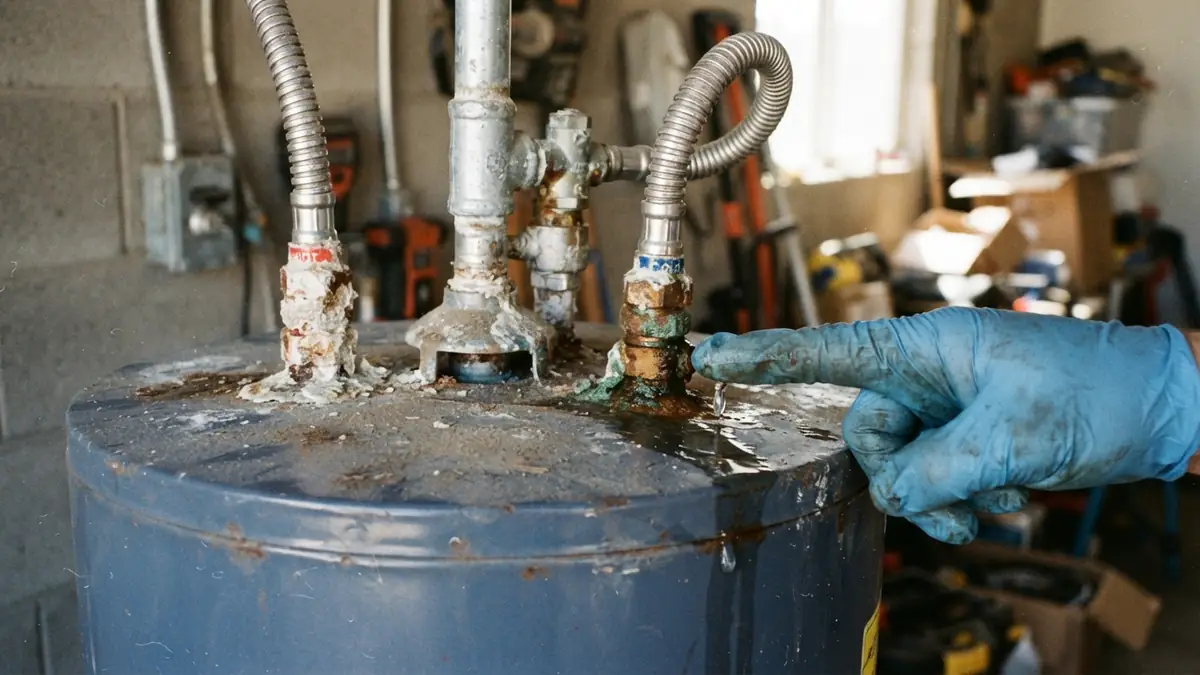
3. Water running down from the top fittings
The hot outlet, the cold inlet, their nipples and flexible connectors all sit on top of the tank. A slow leak there runs down the side, under the jacket and onto the floor. Check the top before you condemn the bottom; the guide to water heater leaks from the top covers each fitting.
4. Condensation that looks like a leak
On a gas water heater, cold incoming water meets the heat of the burner and the tank sweats. The drops fall into the burner area and onto the floor. It is most noticeable on a new tank, after a lot of hot water has been used, or on cold mornings, and it fades once the water is up to temperature. If the water stops when the tank is hot, condensation is the likely answer.
5. An element gasket or the gas control valve
On an electric heater, the lower heating element screws into the tank behind an access panel, sealed by a gasket. With the power off, remove the panel and feel for water. On a gas heater, the gas control valve threads into the front of the tank and can seep at those threads. Both are repairable when the threads are sound.
6. The tank itself
If everything above is dry and water keeps appearing under the tank, inside the burner chamber or under the jacket, the steel tank has corroded through. Rust at the bottom seam, flaking metal and a bulge in the side all point the same way.
A leaking tank cannot be patched. It is replaced, and the sooner the better: when the bottom of a tank finally gives way, the whole tank empties and the supply line keeps feeding it at full house pressure.
Is a water heater leaking from the bottom dangerous?
The relief valve is there to stop the tank from building dangerous pressure or temperature, so explosions are rare. The real danger is water: a failing tank can let go without warning, and the damage to floors, walls and anything stored nearby is where the cost lands.
As a rough guide, a valve or fitting repair is estimated at $150 to $600, while a tank replacement is estimated at $1,200 to $3,500. If you want the source traced for you, book water heater leak repair near you.
Quick answers
Why is my gas water heater leaking water out of the bottom?
Most often it is the drain valve, the relief valve's discharge pipe, water running down from the top fittings, or condensation from the burner. If all of those are dry, the tank itself has corroded through.
Can I still use my water heater if it's leaking from the bottom?
Not until you know the source. Turn the heater off and close its cold supply. Cold water still works in the rest of the house.
Does water at the bottom always mean I need a new water heater?
No. Five of the six common sources are replaceable parts. Only a leak from the tank body means replacement.
Leak still running?
A plumber who handles leaking water heaters can trace it and quote it in writing.