Is Your T&P Valve Dripping? 5 Reasons Why, and When It Means Something Bigger
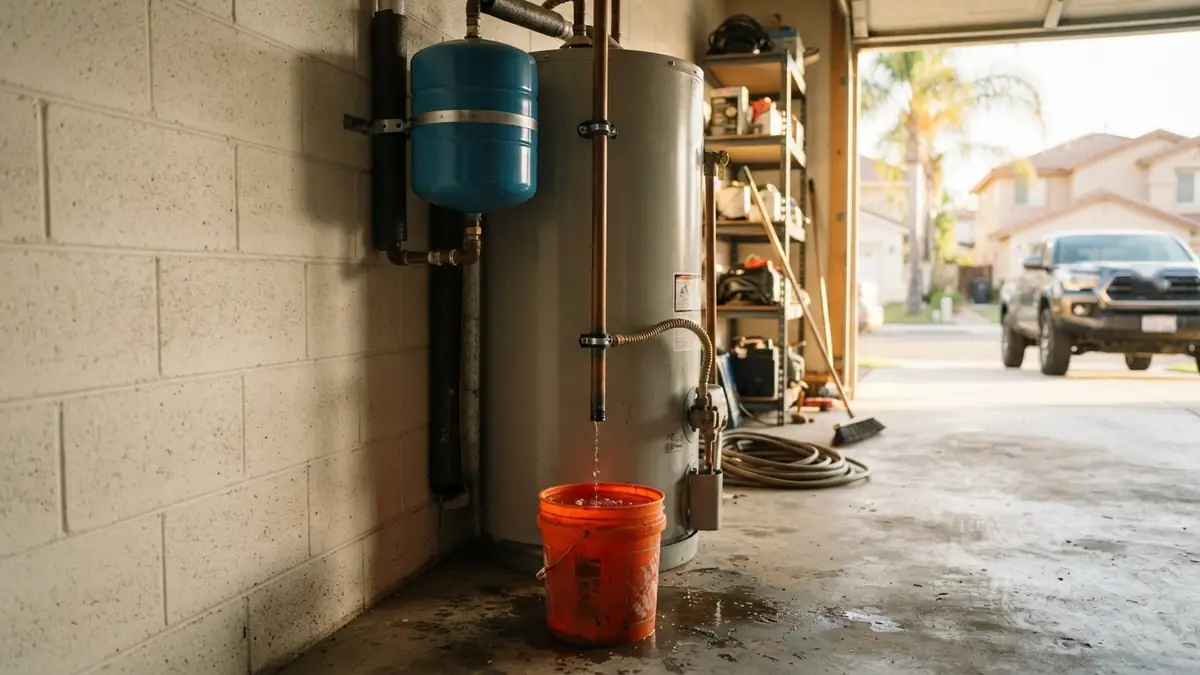
The temperature and pressure relief valve is the safety valve on your water heater. It opens when the pressure inside reaches 150 psi or the water reaches 210 °F, so the tank can never boil or burst. A water heater relief valve leaking is either a tired valve or a valve doing its job.
Telling the two apart matters, because replacing a valve that is reacting to real pressure just gives you a new valve that drips.
1. Debris on the valve seat
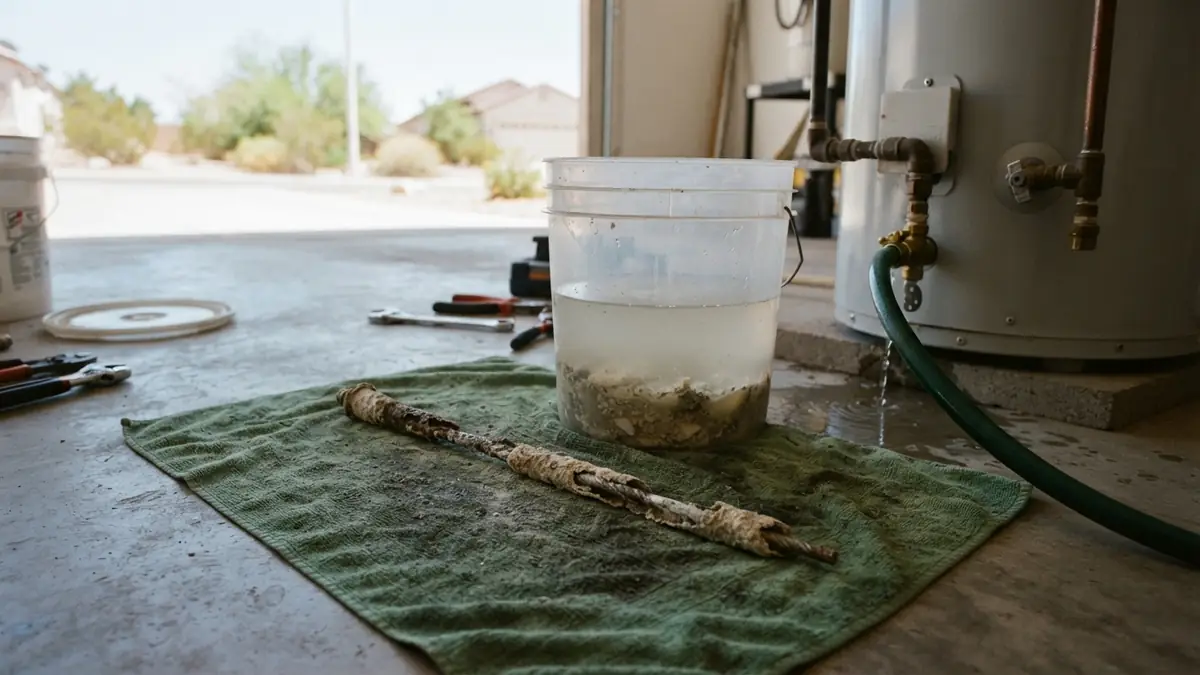
Testing the valve by lifting its lever can leave a fleck of sediment or scale on the seat, and the valve never quite closes again. A slow, steady drip right after a test is the giveaway. Sometimes operating it once more clears the seat; often the valve is simply replaced.
2. A worn-out valve
Springs and seals age. An old valve that drips with normal pressure and temperature is replaced with one that matches the tank's rating plate, usually 150 psi and 210 °F.
3. Thermal expansion with nowhere to go
Water expands as it heats. If the house has a pressure-reducing valve or a check valve at the meter, that extra volume cannot push back into the street, so the pressure climbs every time the heater fires. A valve that drips or opens daily, often after a heating cycle, points here. The fix is a small expansion tank on the cold line, not another relief valve.
4. Street pressure that is too high
High incoming pressure pushes the tank closer to the valve's limit all day long. A gauge on an outdoor tap shows it. A pressure-reducing valve brings it down, and the relief valve stops weeping.
5. Water that is too hot
If the thermostat or gas control is failing, or set far too high, the water can approach the temperature limit and the valve opens on temperature. Hot water spurting from the discharge pipe is a reason to turn the heater off and have the controls checked. Most homes are comfortable at 120 to 125 °F.
When the leak is not the valve
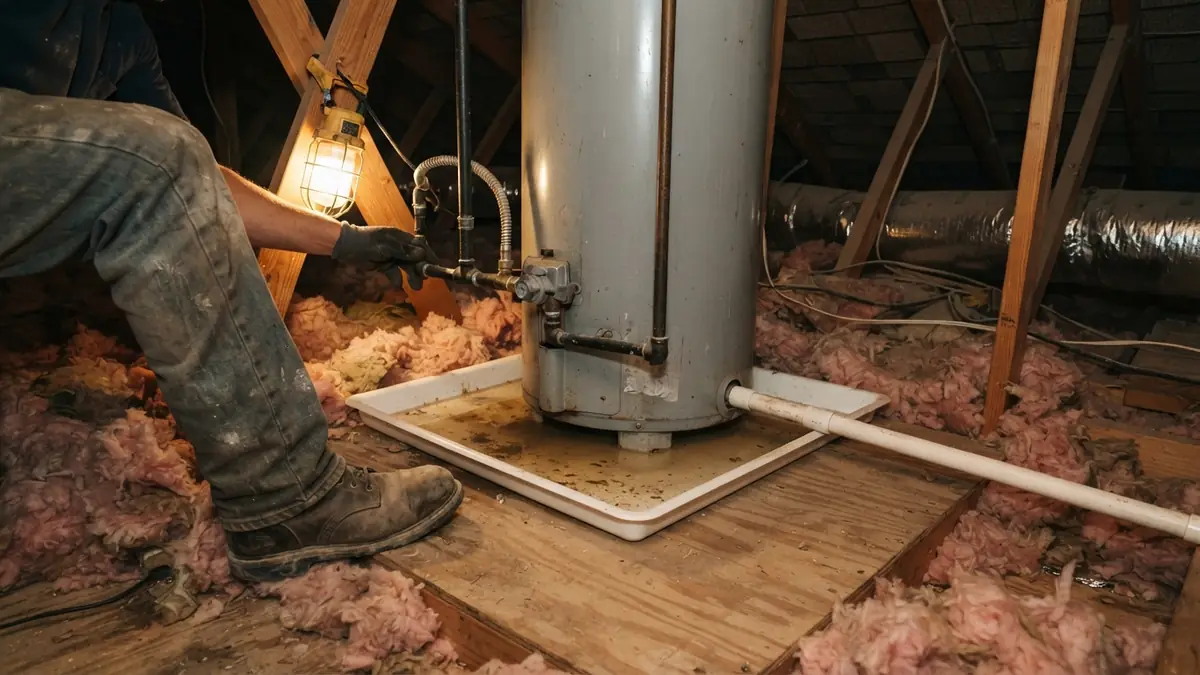
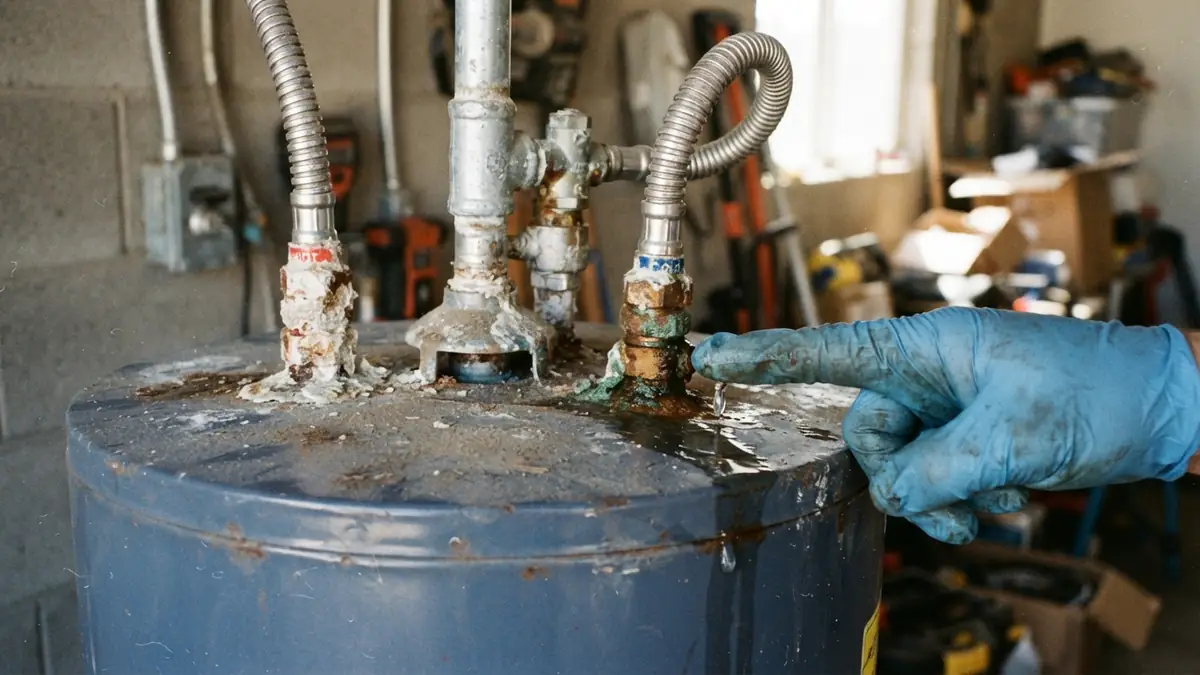
Water at the threads where the valve enters the tank is different. If a new valve does not stop it, the tank's threaded opening has corroded, and that is a replacement conversation.
Never cap, plug or shorten the discharge pipe to stop a drip. It is there so a valve that opens sends scalding water to the floor or a drain, not at a person.
What a relief valve repair costs
Replacing a relief valve is estimated at $150 to $300. Adding an expansion tank or a pressure-reducing valve is priced separately when pressure is the cause. If you would rather have the cause measured than guessed, book water heater leak repair near you.
Quick answers
What should be done if a relief valve is leaking?
Find out why first: debris, a worn valve, thermal expansion, high pressure or overheating. Then replace the valve, add an expansion tank or reduce the pressure, depending on the cause.
How do I get a pressure relief valve to stop dripping?
If it started after a test, operating it once may clear the seat. If not, the valve is replaced, and if it opens regularly, the pressure behind it needs fixing.
Is a dripping overflow pipe an emergency?
A slow drip is not, but book it soon. A steady flow of hot water from the pipe is: turn the heater off.
Leak still running?
A plumber who handles leaking water heaters can trace it and quote it in writing.